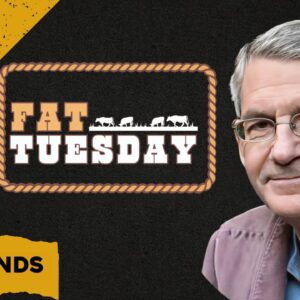


USDA’s Vaden on Coming RVO/RFS: ‘Most Pro-Biofuels Rule any Administration of Any Party Has Put Out’
Oil traders warn $100 crude is near if Iran war continues | USDA issues technical corrections to disaster relief and Dairy Margin Coverage rules
| LINKS |
Link: Video: Wiesemeyer’s Perspectives, March 6 (Interview with USDA Deputy Secretary Stephen Vaden)
Link: Audio: Wiesemeyer’s Perspectives, March 6 (Vaden interview)
| Updates: Policy/News/Markets, March 7, 2026 |
| UP FRONT |
TOP STORIES
— USDA Deputy Secretary Stephen Vaden outlines major policy priorities — Vaden says EPA’s upcoming RFS renewable volume rule could be the most pro-biofuels policy yet, expects China to continue meeting soybean purchase commitments while broader commodity access talks expand, and reports rapid rollout of Farmer Bridge Assistance payments while warning cotton, rice, and sugar beets remain among the most financially distressed crops.
— Hormuz disruption raises global food security risks — IFPRI analyst Joe Glauber warns the Iran war’s impact on shipping through the Strait of Hormuz could tighten global energy and fertilizer supplies, raise farm input costs, and potentially reignite food inflation worldwide.
— Oil traders warn $100 crude is near if Iran war continues — Energy markets are rapidly tightening as Gulf shipping disruptions push Brent above $90 per barrel, with analysts warning prolonged conflict could drive prices into triple digits.
— Russia unlikely to fill fertilizer supply gap — Industry sources tell Reuters that despite being the world’s largest fertilizer exporter, Russia cannot fully replace lost Middle East supply due to production limits, export caps, and infrastructure disruptions.
FINANCIAL MARKETS
— U.S. stocks retreat as geopolitical risks weigh on markets — Major indexes fell sharply Friday and posted weekly losses, with the Dow down over 3% for the week as energy shocks and geopolitical uncertainty pressured equities.
— International funds outperform U.S. equities in 2026 — Global stock funds are beating U.S. funds this year, with international portfolios gaining 9.3% year-to-date versus 2.7% for U.S. funds as investors rebalance toward overseas markets.
AG MARKETS
— Indonesia moves toward WTO retaliation in EU palm oil dispute — Jakarta plans to request authorization to suspend trade concessions against the EU after accusing the bloc of failing to comply with a WTO ruling over restrictions on palm-oil-based biofuels.
— Grain and livestock futures rally in volatile week — Corn, soybeans, and wheat posted solid weekly gains while livestock markets were mixed as traders reacted to global energy disruptions and tightening supply expectations.
FARM POLICY
— USDA issues technical corrections to disaster and dairy programs — Federal Register updates clarify eligibility and payment calculations for the Supplemental Disaster Relief Program and Dairy Margin Coverage rules under recent farm legislation.
— RMA releases 2026 crop insurance spring reference prices — Corn and wheat guarantees declined while soybeans improved, and lower volatility levels are expected to reduce crop insurance premiums ahead of the March 15 enrollment deadline.
ARTIFICIAL INTELLIGENCE
— USDA AI strategy to modernize agriculture programs — The department’s roadmap outlines plans to deploy AI across operations including livestock grading, wildfire monitoring, supply-chain security, and fraud detection in farm programs.
ENERGY MARKETS & POLICY
— Oil prices surge as Hormuz shipping disruption tightens supply — WTI crude on Friday jumped more than 12% to about $90 per barrel as tanker traffic through the Strait of Hormuz stalled, forcing buyers to seek alternative supplies including U.S. exports.
TRADE POLICY
— U.S. and Canada hold constructive talks ahead of USMCA review — Officials discussed the upcoming North American trade pact review and broader bilateral disputes as negotiations intensify ahead of the July deadline.
CYBER STRATEGY
— Trump cyber strategy calls for stronger retaliation against attacks — The administration’s new National Cyber Strategy emphasizes expanded defensive and offensive cyber operations but stops short of directly naming China or Russia as adversaries.
POLITICS & ELECTIONS
— Rep. Darrell Issa to retire from Congress — The veteran Republican’s decision follows California redistricting that shifted his district toward Democrats, creating a competitive open seat ahead of the next election cycle.
FOOD POLICY & FOOD INDUSTRY
— Research suggests not all processed foods carry equal health risks — A Consumer Reports analysis by Sally Wadyka finds that while ultraprocessed foods like soda and processed meat are linked to disease risks, some processed foods such as whole-grain cereals and yogurt may be less harmful.
WEATHER
— Storms and flooding threaten central U.S. while warmth spreads east — The National Weather Service forecasts severe storms from the Great Lakes to Texas this weekend, continued precipitation in the Pacific Northwest, and unusually warm temperatures expanding across the eastern United States.
| TOP STORIES — Highlights of interview with USDA Deputy Secretary Stephen Vaden • Coming EPA RVO/RFS announcement: “With regard to the renewable volume obligation (RVO), our friends at the EPA have been hard at work… the proposal that they put out for comment is in my view the most pro-biofuels rule any administration of any party has put out. “I think when that rule is finalized, based on my understanding of where they have ended up, farmers will rejoice because we will have numbers that we can celebrate.” • 45Z program/Sustainable Aviation Fuel (SAF): “Treasury has put out its piece [on rules), but this is a triptych, if you will. There are three pieces to this work of art, and we’ve got the first piece from Treasury out, but now we’ve got pieces from USDA and the Department of Energy. Right now, where things stand, are USDA and Energy are having conversations, and we’ve got some things we need to button up before we can get our two respective rules out.” Asked if there is a timeline for the USDA and Energy information, Vaden said: “Not one that I’d like to make publicly.” • China: Asked if China will keep meeting its agricultural purchase commitments, and whether there be an official statement from China, Vaden said: “Every indication that we have at USDA, both public and private, has been just like they met that 12 million metric ton commitment [for soybeans] that everybody tried to rain down on and claim wouldn’t be met the first time. They continue to intend to meet the commitments they have made regarding 25 million metric tons [ahead].” As for China, Vaden said: “I have no ability to control what the Chinese government says, but I will say that USDA, when the government is not shut down, we report pretty accurately the sales that are made that are notable for export.” Asked if upcoming China talks will include commodities beyond soybeans, Vaden responded: “Oh, absolutely.” He said ”the attention span of the average general journalist is pretty small. And apparently the only crop that they know of is soybeans. And so that’s all they can write about. But at USDA and in the Trump administration, we are aware that American farmers grow more than soybeans.” “When you look at the state of trade, there are many commodities that are in worse shape and need more new markets than soybeans. Soybeans is actually doing halfway decently right now, thanks to the president’s trade agreement with China, thanks to China keeping that trade agreement. And thanks to there now being discussions about expanding further sales.” “But I know that there are other commodities, whether it be hardwood, sorghum, cotton, and just for starters, that need to be and will be discussed.” “So even though the news media may only focus on one commodity, the U.S. government decidedly is not just focused on one commodity. We’re focused on the bigger picture.” What about beef, pork, and poultry access to China? Vaden: “As you know, even beyond the tariff issue, China needs to approve shipments to their country from American plants. And during the trade disruption, they allowed those authorizations of American plants for many different types of protein to expire. We need China to reapprove those plants for export to their country. And that is an issue that I hope and expect will be brought up during the forthcoming discussions with that country so that we can bring our protein trade, poultry, pork and beef all back to where it needs to be.” • Farmer Bridge Assistance program: “Of the $11 billion dollars that we had set aside (for eligible row crops), more than $6 billion, or that is to say more than half of it had already been distributed. And we’re not even out of the first week of March.” • Timeline on the $1 billion FBA payments for specialty crops and sugar: “I suspect that we will have those payment rates by the end of this month or at the latest very early April.” • Most distressed crops: “If you were to ask me what are the three commodities that I watch most closely in terms of being at the top of the distress list, it would be the white stuff. It’s cotton, rice and sugar beet. So those would be my top three. Those are the commodities that are in the most financial distress in my point of view. They have high costs of production, and they each have unique trade issues.” • USDA reorganization: “Our reorganization will be largely done this year. We will have our employees who want to move with us. And I hope that’s the vast majority to their new locations. They’ll be in their new locations by the end of this year. “We intend to do it in a way to respect those with school age children… and not be the horror story from when we were all young, the new kid who shows up halfway through the year.” • USDA data modernization and public input: ““On April 22, we’re going to have our annual data users meeting in Kansas City, Missouri. We’re going to publish a written report that looks at the estimates that we made throughout the year, compare them to other private sector forecasters, and compare them to what the final numbers actually ended up being. This is not going to be a one-time thing. This is going to be an annual report that we’re going to do.” • New trade agreements and ag sector: “For everyone who’s watching who’s not a part of the policy discussion every day, I want to assure them, every time there’s a trade discussion, it doesn’t matter what country it is, ag has to be on the table. If there’s not a win for ag, we’re not going to get a framework agreement. It’s that simple. That’s why every agreement you have seen has an ag piece in it, whether we’re talking about Vietnam, Indonesia, Bangladesh or Western Hemispheric Partners, the European Union. They all have ag wins. That’s going to continue.” • Ag Trade Outlook report commentary: Asked if USDA will restore commentary to the U.S. Agricultural Outlook report, Vaden said: “It’s kind of a damned if you do, damned if you don’t situation. If we had commentary in there, perhaps not you, but other portions of the press would say, oh, well, that’s just propaganda from the Trump administration. I think the secretary made the right call. We give you the raw numbers. We tell you what’s changed and everybody can add their own commentary to it. Asked if the current report process would continue, Vaden said: “I do expect it to continue. Yes.” • New World Screwworm: “We want to follow the science, and we believe the actions we have taken over the past calendar year plus have had an impact. According to the original estimates of USDA, they predict that absent the steps we have taken, we would have already had a New World screwworm infestation in this country, given the rapid move north… The secretary (Rollins) believes her first goal is to ensure the health and the quality of the American cattle supply… Thanks to our Agricultural Research Service and their innovations in genetic technology, they have been able to create a methodology whereby we will only produce sterile male flies. There will be no female flies produced. We expect to be deploying this later this year.” Note: We had a detailed discussion with Vaden regarding fertilizer prices, supply and potential big moves ahead for more fertilizer production in the United States. He also commented on the current review of tariffs on Morocco fertilizer. Meanwhile, he also discussed the meat sector investigation. As for U.S. sugar policy, Vaden remarked about the two-tier program and the possible need ahead to increase sugar import tariffs. Comments: The Deputy Secretary slot at USDA is a key one. I’ve said over the years that it’s the glue that holds USDA together because the Ag Secretary (now Brooke Rollins) is frequently out giving speeches and meeting ag sector stakeholders, which is a necessity. That means the number two position works on day-to-day matters (budget, congressional issues, farm policy topics, etc.). I have interviewed many USDA officials over my five decades of covering the business of agriculture. Vaden handled the complete list of topics asked with no notes but intellect on the primary issues. He is passionate about what he is doing and that is a hallmark of any successful person inside or outside government. — Hormuz disruption raises global food security risks amid Iran warIFPRI analysis warns energy and fertilizer shocks could tighten global food supplies and farm margins An analysis by Joe Glauber, research fellow emeritus with the International Food Policy Research Institute (IFPRI) and former USDA top economist, warns that the war involving Iran and retaliatory strikes across the Persian Gulf are already disrupting shipping through the Strait of Hormuz — a chokepoint for global energy and fertilizer trade — and could have significant consequences for global food security. In a March 6 IFPRI Markets, Trade, and Institutions blog (link), Glauber writes that a prolonged disruption could drive higher energy and fertilizer prices, tighten farm profitability worldwide, and threaten food supplies in heavily import-dependent Gulf countries. Strait of Hormuz disruption rattles global supply chains. The conflict has sharply reduced maritime traffic through the Strait of Hormuz, the narrow passage linking the Persian Gulf to global shipping lanes. Drone and rocket attacks on tankers and soaring maritime insurance costs have caused shipping volumes through the strait to drop by more than 70% since the conflict began. The corridor is critical to global trade:• About 27% of global oil exports move through the strait.• Roughly 20% of global LNG exports transit the route.• An estimated 20%–30% of global fertilizer exports — including urea, ammonia, phosphates, and sulfur — also pass through the chokepoint. A prolonged closure would effectively choke off exports from major Gulf producers including Saudi Arabia, the United Arab Emirates, Kuwait, Iraq, and Iran, with ripple effects across energy, fertilizer, and agricultural markets. Persian Gulf nations highly dependent on imported food. Countries across the Persian Gulf are particularly vulnerable because they rely heavily on imported agricultural commodities. Wheat consumption in the region often exceeds 100 kilograms per person annually, while vegetable oils, soybeans, rice, and sugar are also major imports. Iran was already experiencing significant food inflation before the war. According to FAO data cited by Glauber, retail food prices in Iran rose 42% year over year in September 2025, reflecting years of sanctions and economic instability. If maritime traffic through the Strait of Hormuz remains restricted, Gulf countries may be forced to shift imports to alternative routes. However, options are limited and costly. Some grain could move overland via Russia into Iran or through Turkey and Syria into Iraq, while Saudi Arabia could redirect shipments to Red Sea ports. Yet even that route faces disruptions from Houthi rebel attacks, which have cut shipping through the Red Sea corridor by nearly 60% since late 2023. Energy and fertilizer markets already reacting. Energy markets have responded quickly to the disruptions. Since the conflict began in late February:• Crude oil futures have climbed more than $10 per barrel, about a 15% increase.• European natural gas prices surged after a drone strike on a Qatar LNG facility, with Dutch TTF gas futures jumping over 50%.• Fertilizer markets have also tightened sharply due to reduced natural gas supplies — a key feedstock for nitrogen fertilizers — and declining exports from the Gulf. Recent price moves include:• Middle East urea prices rising to more than $590 per metric ton, up roughly $90 in one week.• U.S. Gulf diammonium phosphate (DAP) reaching about $655 per metric ton, up roughly $30. The Persian Gulf region is a major global supplier of urea, DAP, and ammonia. Glauber notes that as much as one-third of global fertilizer trade could be affected if shipments remain disrupted. Farm margins could tighten globally. Higher fertilizer and energy costs come at a difficult time for farmers worldwide. Many producers are already dealing with lower prices for grains and oilseeds, meaning higher input costs could significantly reduce profitability. In the short term, impacts may be limited because many farmers have already purchased fertilizer for the Northern Hemisphere spring planting season. However, if disruptions persist, higher fertilizer costs could influence planting decisions and input use later in the year — particularly in the Southern Hemisphere and in major rice-growing regions of Asia. Higher energy prices could also ripple through food systems more broadly. Energy is a major component of agricultural production and post-farmgate costs, including transportation, processing, and refrigeration. Risks of renewed global food inflation. The immediate food security risks are most acute in the Persian Gulf, where heavy reliance on imports leaves countries vulnerable to shipping disruptions. But the broader global concern is that prolonged energy and fertilizer shocks could push food prices higher worldwide. The U.S. has begun providing naval escorts and offering war-risk insurance for carriers operating in the region, but it remains unclear whether those measures will be enough to restore shipping flows. Major shipping companies such as Maersk have already suspended cargo bookings in the Persian Gulf. Glauber concludes that markets historically adapt to disruptions by shifting supply sources, but warns that policy responses will be critical. “Higher energy and input costs risk reigniting global food inflation just as retail food prices had returned to more historical levels in many countries,” he writes. He also cautions that governments should avoid export restrictions or other protectionist measures that could amplify supply shocks — lessons learned from disruptions during the Covid-19 pandemic and the war in Ukraine. — Oil traders warn $100 crude is near if Iran war continuesSupply disruptions in the Strait of Hormuz push energy markets toward a potential triple-digit price shock Energy traders and market analysts warn that global oil prices could soon reach $100 per barrel if the ongoing war involving the United States, Israel, and Iran continues to disrupt shipping and production across the Persian Gulf. Brent crude has already surged above $90 per barrel after rising more than 25% in a week, driven by fears that conflict-related disruptions — particularly through the Strait of Hormuz — could sharply tighten global supply. Market participants say that if tanker traffic and exports from the region remain constrained, crude could climb into triple digits within days, marking one of the fastest geopolitical price spikes in recent years. The conflict has effectively halted or severely reduced tanker movements through the Strait of Hormuz, a critical chokepoint through which roughly one-fifth of the world’s oil supply normally flows. Shipping risks, attacks on vessels, and security warnings have forced many tanker owners and energy firms to suspend movements through the route, sharply limiting exports from Gulf producers. Analysts say the longer the disruption persists, the greater the risk of a sustained price surge. Some banks and traders warn that continued supply constraints could push oil well above $100 per barrel, with more extreme scenarios projecting $120 or even higher if regional production shuts down or the chokepoint remains closed for weeks. The rapid rise in energy prices is already rippling across financial markets and the global economy. Higher oil costs threaten to lift inflation, increase transportation and fertilizer prices, and complicate monetary policy at a time when economic growth is already slowing in several regions. If the conflict escalates further or tanker flows fail to normalize, traders say oil markets could enter a period of extreme volatility similar to previous geopolitical crises — with energy costs becoming a central factor shaping global economic conditions in the months ahead. — Russia unable to fill global fertilizer gap as Iran war disrupts Middle East supplyProduction limits, export caps, and infrastructure attacks constrain Moscow’s ability to offset shortages caused by Hormuz shipping disruptions Russia — the world’s largest fertilizer exporter — is unlikely to compensate for a potential global fertilizer shortfall triggered by the U.S./Iran conflict, according to industry sources cited by Reuters. The war has forced shutdowns at fertilizer plants across the Middle East and severely disrupted shipping through the Strait of Hormuz, a corridor that normally handles roughly one-third of global fertilizer trade. Despite accounting for about 20% of global fertilizer exports, Russia’s ability to expand output quickly is limited by production capacity constraints, domestic supply requirements, and security risks tied to the war in Ukraine. Industry sources cited by Reuters said Russian producers are currently prioritizing domestic supply ahead of the country’s planting season. The government maintains export restrictions introduced in 2021 to ensure local fertilizer availability, further limiting the ability of producers to boost shipments abroad even as global prices rise. Higher prices may benefit exporters on paper, but companies face tight operational limits. New export-oriented fertilizer plants are not expected to come online before 2027, leaving little short-term room for supply expansion. Additional strain emerged after a Ukrainian drone strike on the Dorogobuzh fertilizer facility — owned by major producer Acron — on February 25. The attack temporarily removed about 5% of Russia’s overall fertilizer production capacity. Dorogobuzh alone accounts for roughly 11% of Russia’s ammonium nitrate output and 9% of its NPK fertilizer production. Analysts warn that the loss of Middle Eastern supply could be difficult to replace over the long term. One industry source told Reuters that Russia might be able to cover part of the shortfall in the near term, but the volume lost from the Middle East is too large to fully replace. Russia has nevertheless set ambitious long-term goals for the sector. Andrey Guryev, head of the country’s fertilizer industry lobby, told President Vladimir Putin in 2025 that Russia aims to capture about 25% of global fertilizer trade by 2030. Currently, Brazil, India, and China are among the largest buyers of Russian fertilizer, and the country also exports to the United States. Market analysts say the conflict is likely to push fertilizer prices higher globally. T-Bank analysts noted that supply pressures are intensifying due to several simultaneous factors, including Chinese export restrictions on phosphate fertilizers, the shutdown of sulfur production in Qatar, and ongoing tensions in the Strait of Hormuz. Shares in major Russian producers Acron and PhosAgro have already edged higher since the Iran conflict began in late February, reflecting expectations that tighter global supplies could strengthen the market position of major exporters. For global agriculture, however, the combination of disrupted Middle Eastern production, shipping bottlenecks, and limited capacity elsewhere raises the risk of sustained fertilizer price increases during the upcoming planting seasons. |
| FINANCIAL MARKETS |
— Equities yesterday and weekly change:
| Equity Index | Closing Price March 6 | Point Difference from March 5 | % Difference from March 5 | Weekly Change |
| Dow | 47,501.55 | -453.19 | -0.95% | -3.01% |
| Nasdaq | 22,387.68 | -361.31 | -1.59% | -1.24% |
| S&P 500 | 6,740.02 | -90.69 | -1.33% | -2.02% |
— International funds lead early 2026 market performance
Global equities outpace U.S. funds as investors reassess heavy domestic exposure
International stock funds are outperforming U.S. equity funds so far in 2026. According to LSEG data, the average U.S.-stock mutual fund or ETF gained just 0.1% in February, leaving year-to-date returns at 2.7%. International-stock funds, by contrast, rose 4.2% in February, pushing their year-to-date gain to 9.3%.
Analysts say the shift reflects a rebound in global markets after years of U.S. dominance. Still, strategists note that the U.S> retains key advantages — including strong technology-sector earnings and relative insulation from energy shocks due to its status as a major oil producer. Bond funds also posted moderate gains, with investment-grade debt funds rising 1.6% in February.
| AG MARKETS |
— Indonesia moves toward retaliatory trade measures in EU palm oil dispute
Jakarta seeks WTO authorization to suspend concessions after accusing the EU of failing to comply with ruling on palm oil restrictions
Indonesia said it will request authorization from the World Trade Organization (WTO) to suspend trade concessions against the European Union in an ongoing dispute over restrictions on palm oil-based biofuels. The move follows Indonesia’s determination that the EU has not complied with a WTO dispute ruling addressing its policies on palm oil in renewable fuel markets.
Indonesia’s trade ministry said the government will file a “suspension-of-concessions” request with the WTO dispute settlement body, a step that could allow Jakarta to impose retaliatory trade measures. Trade Minister Budi Santoso said the action is being taken because the EU did not meet the deadline to adjust its policies or fully comply with the WTO panel’s findings and recommendations.
Santoso said the proposed suspension would initially target trade in goods, though Indonesia has not ruled out extending retaliatory measures to other sectors if necessary. He added that Jakarta will carefully calculate economic damages and pursue the case while attempting to preserve broader bilateral relations with the EU.
The dispute stems from EU policies restricting the use of palm oil-based diesel in transportation fuels, part of the bloc’s renewable energy strategy aimed at reducing deforestation and greenhouse gas emissions linked to palm cultivation.
In 2025, a WTO panel largely sided with the EU, ruling that palm oil-based diesel would not qualify as a biofuel under EU rules and should be phased out between 2023 and 2030. However, the panel also determined that the EU had shortcomings in how it prepared, published, and administered certain measures, providing Indonesia with grounds to challenge the implementation of the ruling.
Indonesia — the world’s largest palm oil producer — has argued that the EU’s policies unfairly discriminate against its exports and threaten a critical sector of its economy. If the WTO authorizes Indonesia’s request, Jakarta could impose tariffs or other restrictions on EU goods as compensation for economic losses linked to the dispute.
— Agriculture markets yesterday and weekly change:
| Commodity | Contract Month | Closing Price Mar. 6 | Change from Mar. 5 | Weekly Change |
| Corn | May | $4.60 1/2 | +7¢ | +12¢ |
| Soybeans | May | $12.00 3/4 | +21 1/2¢ | +30¢ |
| Soybean Meal | May | $317.20 | +$7.90 | -$3.30 |
| Soybean Oil | May | 66.58¢ | +88 pts | N/A |
| SRW Wheat | May | $6.16 3/4 | +33¢ | +25 1/4¢ |
| HRW Wheat | May | $6.23 1/2 | +31¢ | +43¢ |
| Spring Wheat | May | $6.43 | +23 1/2¢ | +30 1/4¢ |
| Cotton | May | 64.20¢ | +16 pts | -141 pts |
| Live Cattle | Apr | $234.575 | -$3.95 | +$2.35 |
| Feeder Cattle | Mar | $355.625 | -$6.975 | +$0.20 |
| Lean Hogs | Apr | $95.625 | -$0.05 | -$0.10 |
| FARM POLICY |
— USDA issues technical corrections to disaster relief and Dairy Margin Coverage rules
Federal Register notice clarifies eligibility provisions and payment calculations for the Supplemental Disaster Relief Program and Dairy Margin Coverage
USDA’s Farm Service Agency (FSA) and Commodity Credit Corporation (CCC) published technical corrections in the Federal Register (link) addressing regulatory provisions for the Supplemental Disaster Relief Program (SDRP) and the Dairy Margin Coverage (DMC) program. The corrections fix eligibility provisions, calculation methods, and regulatory references in earlier final rules implementing SDRP assistance and updates to the DMC program under the One Big Beautiful Bill Act.
Supplemental Disaster Relief Program (SDRP) corrections. The rule corrects several provisions tied to SDRP Stage 1 and Stage 2 assistance, which provide payments to producers experiencing disaster-related losses. Key changes clarify eligibility and payment calculations for multiple crop categories.
Note: I presume USDA is sticking with the spring price election, not harvest price.
For sugar beet producers, the correction clarifies that SDRP Stage 2 payments are only disallowed when a cooperative processor has already received a payment for the same loss through a block grant or cooperative agreement.
The rule also addresses producers insured under Pasture, Rangeland, and Forage (PRF) policies. Some producers were excluded from SDRP Stage 1 because acreage intended for grazing was mixed with acreage intended for forage or grain. The correction now allows those producers to qualify for Stage 2 assistance for eligible crop losses, provided they document the share of acreage eligible for payment.
Another correction fixes the quality-loss calculation method for forage crops. The updated regulation clarifies that producers must calculate the percentage loss by comparing the tested nutritional value of the forage to a high value set by FSA and dividing that difference by the range between the high and low values established by the agency. The resulting quality loss percentage cannot exceed 100%.
The rule also corrects typographical errors, paragraph references, and step sequences used to calculate Stage 2 payments for several crop categories, including:
• Insured crops covered under dollar-based or revenue plans
• Insured crops under value-loss coverage
• NAP-covered yield-based crops with and without approved payment applications
• Uninsured yield-based crops
These corrections ensure the order of calculation steps and references in the regulations align with the methodology described in earlier program rules.
Example payment calculation clarification. FSA also corrected typographical errors in an example of a Stage 2 payment calculation for a soybean crop insured under an Actual Production History (APH) plan. The example illustrates how SDRP liability, production levels, quality loss adjustments, premiums, and administrative fees factor into the final payment calculation for a producer.
Dairy Margin Coverage eligibility correction. The rule also fixes an oversight in the Dairy Margin Coverage program regulations related to eligibility for dairy operations that cease production.
The earlier rule implementing changes under the One Big Beautiful Bill Act required dairy operations to be commercially marketing milk at the time of each annual coverage election. However, the agency inadvertently omitted language allowing operations that stopped producing milk before or during the election period to still qualify for coverage for the days they marketed milk during the year. The correction restores that provision for 2026 and future years, ensuring dissolved or closed dairy operations remain eligible for DMC payments covering the portion of the year they were actively marketing milk.
Effective date. The technical corrections take effect March 9, 2026, and apply to the SDRP and DMC program regulations codified in 7 CFR Parts 760 and 1430.
— RMA releases 2026 spring reference prices for key crops
Lower volatility and mixed price signals shape crop insurance guarantees ahead of March 15 sales deadline
USDA’s Risk Management Agency (RMA) has released the spring reference prices for the 2026-27 crop insurance year, establishing the revenue guarantees that underpin most federal crop insurance policies.
The February pricing period produced lower corn and spring wheat guarantees but a higher soybean backstop, while volatility levels declined across major commodities. The lower volatility environment — combined with enhanced subsidies in the One Big Beautiful Bill Act — is expected to reduce insurance premiums while maintaining relatively strong revenue guarantees, a key factor as producers finalize coverage before the March 15 sales closing date.
Corn’s spring insurance price averaged $4.62 per bushel, down from $4.70 in 2025, while volatility dropped to 15% from 18%.
For soybeans, the spring guarantee rose to $11.09, up from $10.54 last year, supported in part by a mid-February rally tied to speculation over additional Chinese purchases. Soybean volatility slipped to 13% from 14%.
Spring wheat’s insurance price averaged $6.19 per bushel, down from $6.55 in 2025, while volatility fell to 16% from 19%. Dryness in the Northern Plains provided little price support during the pricing window, potentially weighing on planted acreage this spring.
Cotton futures averaged 69 cents per pound, roughly unchanged from last year, with volatility also holding steady near 14%.
The soybean-corn price ratio stands near 2.4, historically close to average levels. While that ratio alone provides limited guidance for planting decisions, analysts say input costs, crop rotations, and margin pressure could lead to a modest shift toward soybeans in USDA’s upcoming Prospective Plantings report.
Bottom Line: Lower volatility across crop markets will help reduce insurance premiums, further supported by increased federal subsidies enacted in the One Big Beautiful Bill Act. The combination allows producers to secure higher revenue backstops at lower cost, an important consideration as farm margins remain tight.
USDA Risk Management Agency — 2026 Spring Reference Prices
| Commodity | 2026 Spring Reference Price | 2026 Volatility | 2025 Spring Reference Price | 2025 Volatility |
| Corn | $4.62 | 15% | $4.70 | 18% |
| Soybeans | $11.09 | 13% | $10.54 | 14% |
| Spring Wheat | $6.19 | 16% | $6.55 | 19% |
| Cotton | $0.69/lb | 14% | $0.69/lb | 14% |
| ARTIFICAL INTELLIGENCE (AI) |
— USDA’s artificial intelligence strategy for agriculture
Roadmap outlines how AI will modernize farm programs, improve food security, and strengthen USDA operations
USDA’s “AI Strategy” — authored by Christopher Alvares, USDA Chief Data & AI Officer, with a foreword by Agriculture Secretary Brooke Rollins — outlines how the department plans to integrate artificial intelligence across its programs over the next two years to enhance efficiency, strengthen food production systems, and modernize government services for farmers and rural communities. The publication was initially released September 2025, but is now garnering more attention with the increased use of AI.
According to the strategy document, the initiative aligns with federal directives to expand AI adoption across government and aims to embed AI into key USDA missions ranging from commodity grading and wildfire monitoring to loan processing and fraud detection. The department views AI as a tool to improve decision-making, streamline operations, and expand the agency’s ability to serve producers and consumers nationwide.
AI as a core modernization tool. In a message introducing the strategy, Secretary Rollins emphasized that emerging technologies can strengthen USDA’s ability to deliver services and respond to crises affecting agriculture. “Cutting-edge data and technology enable USDA to provide first-class service to the farmers and ranchers that feed and serve all Americans,” Rollins wrote, noting that AI will support activities ranging from disaster response to fraud detection and food production resilience.
The strategy establishes a vision of building an AI-ready workforce, governance framework, and technical infrastructure that will allow USDA to incorporate advanced analytics and machine learning into everyday operations. The plan covers fiscal years 2026-2027 and was developed through consultations across USDA mission areas using a departmental assessment of AI capabilities.
Major areas where USDA plans to deploy AI. The report identifies several operational areas where AI could deliver near-term improvements:
Commodity grading modernization
AI image analysis is being tested to evaluate ribeye images for beef grading — a process that could replicate human grader accuracy and expand grading access for smaller packers through remote evaluations.
Forest health and wildfire prevention
The Forest Service plans to apply AI tools to improve wildfire detection, fire behavior modeling, fuel mapping, and storm damage analysis using remote sensing and inventory data.
Food production and resilience
Machine learning will analyze genetic, environmental, and livestock health data to help researchers develop crops that are more resilient to drought, pests, and disease while improving animal productivity.
Agricultural stability and supply-chain security
USDA intends to use AI to monitor food supply chains, identify pest threats, and analyze agricultural land ownership patterns — including foreign ownership risks.
Fraud detection in federal programs
AI systems will be deployed to flag suspicious activity in programs administered by agencies such as the Farm Service Agency (FSA), Rural Development, and the Supplemental Nutrition Assistance Program (SNAP). Human oversight will remain in place for final decisions.
Loan program modernization
The strategy calls for integrating AI into USDA lending systems to automate application processing, improve customer support, and assist staff in underwriting risk while maintaining compliance with federal AI governance rules.
Five strategic pillars for AI adoption. USDA’s roadmap is built around five overarching goals:
• Workforce readiness — training employees in AI skills and expanding programs such as the USDA Data Science Training Program.
• AI infrastructure and tools — building centralized platforms such as the USDA AI Lab and enterprise analytics systems.
• Data readiness and access — improving data quality, sharing standards, and privacy protections.
• Trusted and scalable AI — adopting the National Institute of Standards and Technology (NIST) AI risk management framework.
• Governance and leadership — establishing oversight mechanisms and tracking AI use cases across the department.
Collaboration with universities and industry. The strategy highlights partnerships with universities and technology firms as a key source of innovation. Hackathons and research collaborations have already produced prototypes such as AI chatbots for USDA public inquiries, computer-vision tools for livestock grading, and mapping models for national forest infrastructure.
Long-term outlook: USDA officials say the plan lays the groundwork for broader AI integration in the coming years, with the Chief AI Officer working with individual mission areas to develop implementation plans tailored to specific programs. Ultimately, the department argues that AI will allow USDA to reduce administrative burdens, improve public service delivery, and help farmers and ranchers navigate increasingly complex agricultural challenges while ensuring human oversight and data security remain central to federal decision-making.
| ENERGY MARKETS & POLICY |
— Friday: Oil prices surge as Strait of Hormuz disruption drives global supply shock
WTI jumps more than 12% as traders scramble for alternative barrels and Gulf exports stall amid U.S./Israel conflict with Iran
Oil markets rallied sharply Friday as the escalating U.S.–Israeli conflict with Iran effectively shut down shipping through the Strait of Hormuz, sending global crude prices higher as traders sought alternative supplies.
Brent crude settled at $92.69 per barrel, up $7.28.
U.S. West Texas Intermediate (WTI) rose $9.89 — 12.21% — to $90.90, marking the second straight session in which U.S. crude gains outpaced Brent. The narrowing spread reflects a growing shift by refiners and traders toward U.S. crude, as Middle Eastern shipments remain severely constrained.
The disruption in the Strait of Hormuz — a chokepoint that normally carries roughly 20% of global oil supply — has largely halted tanker traffic for seven consecutive days. As a result, about 140 million barrels of crude, equivalent to roughly 1.4 days of global oil demand, has been unable to reach international markets. The interruption has also triggered precautionary shutdowns and output cuts at refineries and liquefied natural gas facilities across the region, increasing fears that supply shortages could deepen if the conflict continues.
The U.S., currently the world’s largest oil producer, is emerging as one of the few suppliers capable of increasing exports quickly enough to offset lost Middle Eastern barrels. Analysts say this dynamic is driving the strong performance in WTI futures relative to Brent as global buyers increasingly turn to U.S. crude.
The rally has put oil on track for its largest weekly gain since the extreme volatility of early 2020 during the Covid-19 pandemic. Some analysts warn that if Gulf producers further curtail exports, prices could climb substantially higher. Qatar’s energy minister told the Financial Times that a scenario in which Gulf oil exports were suspended could push crude prices toward $150 per barrel.
Despite the surge in fuel costs, President Donald Trump downplayed concerns about gasoline prices, saying that “if they rise, they rise.” The administration also ruled out using the Treasury Department to intervene in oil futures markets, though it has granted waivers allowing some companies to purchase sanctioned Russian crude to ease global supply pressures.
| TRADE POLICY |
— U.S., Canada hold “constructive” talks ahead of USMCA review
LeBlanc and Greer discuss trilateral trade pact review, bilateral disputes and next steps as July 1 deadline approaches
Canada and the U.S. held a “constructive and substantive” discussion Friday regarding the upcoming review of the U.S.–Mexico–Canada Agreement (USMCA), according to the office of Canada’s minister responsible for U.S. trade. The talks come as the three countries prepare for a mandated review of the North American trade pact before July 1, a process that could reshape the agreement’s future.
Canadian Trade Minister Dominic LeBlanc met in Washington with U.S. Trade Representative Jamieson Greer to discuss the review process as well as broader bilateral trade concerns. According to a statement from LeBlanc’s office, the two officials agreed to continue working together on trade issues and plan to hold further discussions in the coming days.
During the meeting, LeBlanc also introduced Canada’s new chief trade negotiator, Janice Charette, and newly appointed ambassador to the United States, Mark Wiseman, signaling Canada’s effort to strengthen its negotiating team ahead of the review.
The USMCA review could prove contentious. President Donald Trump has previously suggested the trilateral agreement may be unnecessary for the United States and has floated the possibility of replacing it with separate bilateral deals with Canada and Mexico.
Canada has also been seeking relief from certain U.S. tariffs affecting key sectors, with LeBlanc recently indicating negotiations are underway that could potentially be folded into broader bilateral arrangements alongside the trade pact review.
For its part, the U.S. has identified several outstanding trade concerns with Canada. Greer has previously described negotiations with Ottawa as “more challenging,” pointing to disputes over Canadian restrictions on dairy imports and barriers affecting U.S. wine and spirits sales.
While the U.S. has already begun the USMCA review process with Mexico, discussions with Canada have not formally started. U.S. and Mexican negotiators are scheduled to begin bilateral talks the week of March 16 as part of the broader review of the North American trade framework.
| CYBER STRATEGY |
— Trump calls for tougher cyber retaliation in new national strategy
Strategy outlines expanded use of U.S. defensive and offensive cyber operations to deter attacks, though it stops short of naming China or Russia as primary adversaries
The White House on Friday released its long-awaited National Cyber Strategy (link), outlining the Trump administration’s plan to use both defensive and offensive cyber capabilities to counter foreign threats. The document states the U.S. will “deploy the full suite of U.S. government defensive and offensive cyber operations” to weaken adversaries’ capabilities and increase the cost of hostile cyber activity. Notably, however, the strategy avoids explicitly naming China or Russia — widely viewed in Washington as the United States’ primary cyber adversaries.
| POLITICS & ELECTIONS |
— Issa to retire from House after decades in Congress
Redrawn California district and shifting political landscape factor into veteran Republican’s decision
Rep. Darrell Issa announced he will retire from the House of Representatives at the end of his current term, closing out a long congressional career that has spanned more than two decades and multiple political eras on Capitol Hill.
Issa, a Republican from California, said his decision comes as the state’s latest redistricting map reshaped his district in a way that now favors Democrats. The redrawn boundaries were part of California’s most recent political map overhaul, which significantly altered the partisan balance in several districts ahead of upcoming elections.
First elected to Congress in 2000, Issa built a reputation as one of the House’s most prominent conservative voices on oversight and government accountability. He previously served as chairman of the powerful House Oversight and Government Reform Committee, where he frequently led high-profile investigations into federal agencies and administration policies.
The district realignment dramatically shifted the political makeup of Issa’s seat, increasing the share of Democratic voters and making reelection prospects more challenging for Republicans. Political analysts said the changes were likely to trigger a competitive contest in the next election cycle.
Issa’s retirement adds another open seat to the already evolving House battlefield ahead of the midterm elections, where control of the chamber could hinge on a handful of competitive districts in states such as California. Republican leaders praised Issa’s tenure and his role in shaping congressional oversight debates, while Democratic strategists signaled that the newly redrawn district could present a strong pickup opportunity for their party.
Of note: In other California news, Rep. Kevin Kiley (R-Calif.) filed for re-election as an independent. California’s 6th District, where Kiley is running, also shifted toward the Democrats under California’s new maps.
| FOOD POLICY & FOOD INDUSTRY |
— Not all processed foods are created equal
Consumer Reports analysis finds some processed foods may carry fewer health risks than ultraprocessed staples like soda and processed meat
A Consumer Reports article (link) by Sally Wadyka finds that while ultraprocessed foods are widely linked to poorer health outcomes, emerging research suggests some processed foods — such as whole-grain cereals, yogurt, and packaged breads — may not pose the same risks. The analysis highlights new studies indicating that the negative health impacts associated with ultraprocessed foods are driven largely by specific categories, including sugary beverages and processed meats, rather than the entire group of processed products.
Distinguishing between processed food types. Ultraprocessed foods (UPFs) — typically industrially manufactured items like chips, packaged cookies, and sugary drinks — are often high in sugar, sodium, and fats and contain long lists of additives. These foods now account for roughly 60% of the average American diet, making them a major focus of public health research.
A 2024 review in The BMJ (link) analyzing 45 studies linked diets high in ultraprocessed foods to 32 health conditions, including obesity, cancer, heart disease, and depression.
However, the category itself is broad. According to Josiemer Mattei, a nutrition researcher at the Harvard T.H. Chan School of Public Health, grouping all ultraprocessed foods together can obscure important differences in health impacts.
Research finds some foods drive most risk. A large study published in The Lancet (link) examined 30 years of dietary data from more than 200,000 people. The research found that diets containing about 46% ultraprocessed foods were associated with an 11% higher risk of cardiovascular disease compared with diets containing less than 18%.
But the elevated risk largely disappeared once researchers removed sugar-sweetened beverages and processed meats from the analysis — two categories strongly associated with added sugar, sodium, and nitrates.
Similarly, a 2024 study in The Lancet Regional Health–Europe (link) found that every 10% increase in ultraprocessed food consumption raised type 2 diabetes risk by 17%. Yet again, only certain foods appeared to drive the risk, including:
• Processed meats and cheeses
• Sugary or artificially sweetened beverages
• Savory snacks such as chips
• Ready-to-eat meals
Researchers note these products tend to pack high calorie density into small portions, increasing the likelihood of overconsumption.
Some processed foods may provide benefits. Both studies found that some processed foods were linked to lower risks of certain diseases.
Participants who consumed higher amounts of breakfast cereal had an 8% lower risk of cardiovascular disease, while yogurt and packaged breads were also associated with reduced disease risk in some analyses.
These foods may offer nutritional benefits because many are fortified with vitamins and minerals, and whole-grain versions provide dietary fiber.
Moderation still key. Despite these distinctions, nutrition experts emphasize that whole and minimally processed foods should still make up the majority of a healthy diet.
Evidence suggests even modest improvements can have measurable effects. In the diabetes study, replacing just 10% of ultraprocessed foods with minimally processed foods reduced diabetes risk by 14%.
Examples of healthier alternatives include:
• Canned beans and fish
• Frozen fruits and vegetables
• Pasta and other minimally processed grains
• Home-prepared meals
The research underscores a growing consensus among nutrition scientists: rather than eliminating all processed foods, the focus should be on reducing the most harmful categories — particularly sugary beverages, processed meats, and highly calorie-dense snack foods.
| WEATHER |
— NWS outlook: Severe weather and flash flood risk expected with widespread showers and thunderstorms from the Great Lakes to Texas Saturday… …Lower elevation coastal/valley rain and high elevation snow will continue for the Pacific Northwest and northern Rockies this weekend… …Well above average to record warmth pushing eastward into the eastern
U.S. as anomalous warmth emerges over the northern Plains during the
weekend.